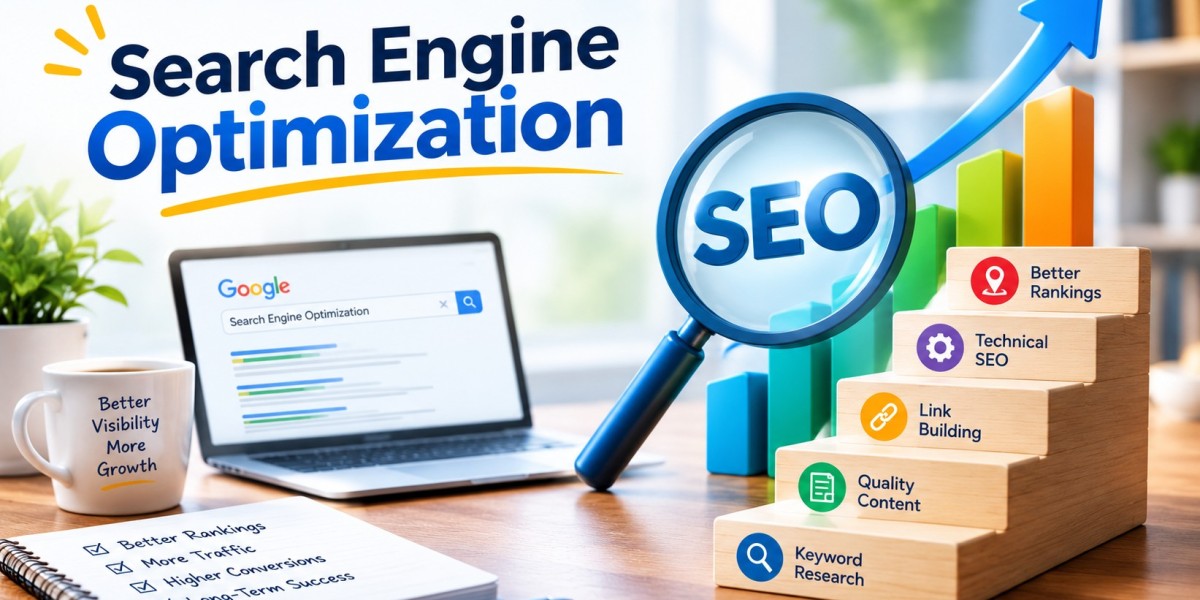

Most businesses reach the same point the website exists, the product is good yet customers are not finding it. Staff are busy, the marketing budget is limited, the rules of search seem to change every few months. At that point, many decide that Search Engine Optimization Services are worth exploring. The decision is rarely about whether organic search matters. Industry research consistently places it among the largest sources of website traffic visitors who arrive through search usually have a clear need.
The real question is how to pick a partner who will deliver steady progress rather than vague reports and inflated promises. This article walks through the options, the deliverables, the pricing models and the warning signs. It is written to help you ask better questions before you sign anything and to set realistic expectations about what professional help can achieve. If you are still mapping out the scope of work, an overview of professional Search Engine Optimization Services can help clarify what a complete engagement typically includes.
What Search Engine Optimization Services Typically Include
A complete engagement covers several workstreams. It usually starts with an audit to find technical errors, content gaps, missed opportunities. Keyword and competitor research follows, identifying which topics have real demand and which rivals are already winning them. From there the work divides into onpage improvements, technical fixes, content production authority building, with reporting running through all of it.
Not every business needs every service at the same intensity. A new site may need foundational technical and content work first. An established site may need targeted refreshes and link building. A multilocation business may focus on local visibility. The right scope reflects your starting point, not a generic package.Ask any provider to describe, in plain language, what will be done in the first 30, 60, 90 days. A clear answer indicates a real process. A vague answer about “optimizing your website” does not.
Agency, Company, Expert, or Consultant What Is the Difference?
The labels are often used loosely, but they hint at different ways of working. A Search Engine Optimization Agency generally offers a multidisciplinary team of strategists, writers, developers and link builders under one roof. This suits businesses that want a full program and do not want to coordinate several freelancers. A Search Engine Optimization Company may be similar in size but sometimes specializes in particular platforms or industries. A Search Engine Optimization Expert or Consultant is often an individual or small practice, strong on strategy and advice, who may work alongside your inhouse team and rely on you or others for execution.None of these is inherently better. The best fit depends on how much internal capacity you have, how complex your site is, whether you need strategy, execution, or both. A small team with a developer and a writer may thrive with a consultant. A business with neither may need an agency’s breadth.
Professional Search Engine Optimization What Does Professional Mean?
The word professional gets used freely, so look for evidence. Professional Search Engine Optimization is transparent about methods, documents every change ties activity to business goals. It does not hide behind jargon, it explains tradeoffs honestly, including when something will take longer than hoped. Look for provider case studies that show starting points, actions taken and measurable outcomes. Ask whether the people presenting the pitch are the people who will do the work. Check whether they follow search engine guidelines and can describe how they avoid risky tactics such as paid link networks or automated content spam.Professionalism also shows in communication. Regular reports in plain language, a named point of contact agreed review meetings are signs of a provider who expects to be held accountable.
Affordable Search Engine Optimization Services Where Value Really Lies
Budget matters many providers advertise Affordable Search Engine Optimization Services. Affordable should not mean cheap at any cost. The cheapest offers often rely on automated reports, templated content lowquality links that offer little lasting benefit and can even cause harm. Value comes from focus. A modest budget spent on the three or four changes most likely to move results is better than a thin spread across everything.
For example, fixing a crawling problem, rewriting the ten most important pages earning a handful of relevant links can outperform a bloated package of minor tasks.When comparing quotes, ask what is excluded as well as what is included. Hidden costs for content, reporting, or technical development can make a low headline price expensive in practice.
Search Engine Optimization Packages and Pricing
Search Engine Optimization Packages typically come as tiered monthly retainers, fixedscope projects, or hourly consulting. Search Engine Optimization Pricing varies widely based on competition, site size and the depth of work. Industry surveys commonly report that small businesses spend a few hundred to a few thousand dollars monthly, while larger organizations in competitive markets invest considerably more.
The table below outlines the common models and their strengths and tradeoffs.
Pricing Model | Best For | Advantages | Limitations |
Monthly retainer | Ongoing growth | Consistent effort, continuity | Needs several months to show results |
Fixedscope project | Audits, migrations, launches | Predictable cost and timeline | No ongoing optimization |
Hourly consulting | Specific questions, inhouse teams | Flexible, targeted advice | Less handson execution |
Performancebased | Clearly measurable goals | Aligns cost with outcomes | Hard to define fairly; may encourage shortcuts |
Be cautious about packages that promise a fixed number of links or pages without describing quality. Output volume is a poor proxy for impact.
The Role of the Search Engine Optimization Audit
A Search Engine Optimization Audit is the foundation of any sound engagement. It examines crawlability, indexation, site speed, mobile usability, duplicate content, internal linking, metadata, structured data, backlink profile content quality. A good audit ends with a prioritized action list, not just a long spreadsheet of errors. Prioritization is the part that matters. Not every error is equally harmful.
A missing alt attribute on a decorative image is trivial; an accidentally blocked section of the site is severe. The audit should rank issues by likely impact and effort so the first month’s work addresses the biggest gains. For sites with complex architecture or performance problems, a specialist review through Technical SEO Search Engine Optimization can uncover crawl and indexation issues that general audits miss.
Search Engine Optimization Management Keeping the Work on Track
Search Engine Optimization Management is the ongoing coordination of tasks, priorities reporting. It turns a plan into a rhythm of monthly priorities, weekly progress, quarterly strategy reviews. Without it, work drifts and results become difficult to attribute. Good management includes a shared roadmap, clear ownership of each task agreed measures of success. It also means saying no to distractions. Chasing every algorithm rumor or competitor tactic can scatter focus; a documented strategy provides a reference point.Whoever manages the program should be able to explain, in a sentence, why each task is on the list and what outcome it should produce.
Search Engine Optimization Solutions Tailored to Your Business Type
Search Engine Optimization Solutions are most effective when they reflect the way a business makes money. A software company wins through comparison content and educational resources. A local trades business wins through map visibility and reviews. An online store wins through wellstructured category and product pages.That is why generic playbooks disappoint. Ask any provider how they would adapt their approach to your sector, customers sales cycle. A strong answer references your buyers’ questions, your competitors’ strengths and the pages on your site likely to produce revenue.
Search Engine Optimization for Small Businesses
Search Engine Optimization for Small Businesses should be tightly focused. Limited budgets reward specificity, target a narrow set of high intent keywords, build a few excellent service pages, claim and complete local profiles and collect real customer reviews. Small businesses also have advantages. They can move quickly, they know their customers personally and they can publish content that reflects genuine local knowledge.
A short, honest article answering a question customers ask every week often outperforms a generic page written by someone who has never met them.When the business serves a defined area, investing in Local Seo Search Engine Optimization usually produces the fastest visible gains, because competition in map results is often less intense than in national rankings.
Search Engine Optimization for Startups
Startups face a different challenge, no authority, no brand search pressure to show growth quickly. Search Engine Optimization for Startups works best when it targets low competition, high intent queries first, builds a clear site structure from the start and avoids expensive rework later. Launching with a sound technical base is cheaper than fixing it afterward. Choose clean URL patterns, plan the content structure before building pages, set up analytics and search console from day one. Then publish consistently around the problems your product solves.Startups can also benefit from building authority through original data, founder expertise partnerships, which earn the kind of mentions that new brands struggle to buy.
Search Engine Optimization for Enterprises
Large organizations bring scale and complexity, many teams, multiple domains, legacy systems and long approval chains. Search Engine Optimization for Enterprises is as much about governance as tactics. Templates, standards training ensure thousands of pages meet the same quality bar. Enterprise programs often benefit from automation for monitoring, structured data deployment largescale internal linking. They also need strong stakeholder communication, because progress depends on developers, legal teams, content owners who have their own priorities.Measurement must scale too. Segment performance by section, product line market, so decision makers see where investment is paying off and where it is not.
Search Engine Optimization for B2B Companies
B2B buyers research extensively before contacting a vendor, often consulting many sources over weeks or months. Search Engine Optimization for B2B Companies must therefore serve every stage of problem awareness, solution comparison, vendor evaluation and final justification to colleagues. Content that wins includes detailed guides, comparison pages, implementation checklists, case studies pages addressing objections directly.
Because search volumes in specialist niches can be small, targeting the right intent matters more than chasing big numbers. A handful of searches from decision makers can be worth more than thousands of casual visits.Lead quality is the key metric. Track form submissions, demo requests pipeline value from organic traffic, not just sessions.
Search Engine Optimization for Ecommerce Websites
Online retailers need tight control over product and category pages, faceted navigation and duplicate content. Search Engine Optimization for Ecommerce Websites includes unique descriptions, review and product markup, careful handling of discontinued items, efficient internal linking from categories to products. Revenue attribution is clearer in ecommerce, which makes measurement easier.
Track organic revenue by category and prioritize pages with strong impression volume but weak clickthrough or conversion. Specialist ecommerce SEO support can structure large catalogs so that search engines see the valuable pages and skip the noise.Seasonality also deserves planning. Updating key pages well before peak periods gives search engines time to recrawl and reassess them.
International Search Engine Optimization
Businesses selling across borders need International Search Engine Optimization to make sure the right version of a page reaches the right audience. That involves choosing a structure (countryspecific domains, subdirectories, or subdomains), implementing hreflang annotations correctly localizing content beyond simple translation. Localization includes currency, units, tone, examples and legal requirements. Machinetranslated pages that ignore these details rarely perform well. Where possible, involve native speakers to review key pages and research how people in each market actually phrase their searches.
What to Ask Before You Hire
A short list of questions separates credible providers from the rest. How will you measure success? What will you do in the first 90 days? Who will work on my account? How do you build links? Can I see examples of similar work? What happens if results are slower than expected? How do you report how often? Pay attention to the way questions are answered. Specific answers with caveats are a good sign. Guarantees of top positions, secret techniques, or pressure to sign quickly are not. A confident provider will welcome scrutiny.
Red Flags to Watch For
Be wary of promises of guaranteed rankings, since no one controls search results. Beware of providers who will not explain their methods, who offer unusually cheap link packages, or who demand ownership of your website assets. Contracts that lock you in without clear performance reviews also deserve caution. Another warning sign is a focus on vanity metrics. Reports filled with impressions and keyword counts but silent about leads and revenue suggest a team that is not looking at the same outcomes you are.
How AI Search Changes What You Should Expect From a Provider
A modern provider should discuss more than bluelink rankings. AIgenerated summaries and conversational assistants now influence how people discover brands, so ask how a provider approaches visibility in those environments. Look for experience with structuring concise, quotable answers, a practice associated with answer engine optimization with improving the chances of being referenced in generative responses through GEO services. A provider who can connect classic ranking work with these newer layers is better prepared for how search is evolving.
Local Search Engine Optimization and Search Engine Optimization Company Near Me
Many buyers begin their search with Search Engine Optimization Company Near Me, hoping for a partner who understands their market. Proximity can help with communication and local knowledge, but it should not outweigh capability. Remote providers with strong track records can deliver excellent results if communication is clear. Evaluate by evidence reviews, case studies the quality of their own site’s content and visibility. A provider that cannot rank itself for relevant topics deserves a few pointed questions.
Setting Realistic Expectations
Search Engine Optimization is a compounding investment. In the first month, expect audits, fixes planning. In months two and three, expect improvements in crawling, page quality early ranking movements. From month four onward, traffic and leads usually begin to build, with larger gains appearing as authority accumulates. Competitive industries take longer and new sites need time to earn trust. A provider who is honest about this timeline is more trustworthy than one who promises miracles in thirty days.
Building a Productive Working Relationship
The best engagements are partnerships. Share business goals, sales data, customer insights, as these inform the strategy. Respond promptly to requests for approvals and access. Hold regular reviews expect the provider to challenge assumptions occasionally. Treat reporting as a conversation rather than a document. Ask why a metric moved, what was learned and what will change next month. Over time, this feedback loop makes the work sharper.
Choosing With Confidence
The right Search Engine Optimization Services partner will listen before they propose, explain before they sell measure before they claim success. They will match their approach to your business, be honest about timelines, stay accountable to outcomes you care about. If you want to discuss scope, goals, priorities with a team that covers search, content AI visibility together, IT Leadz can help you plan the next step.
Frequently Asked Questions(FAQs)
What do Search Engine Optimization Services include?
Typical services include an audit, keyword research, on page improvements, technical fixes, content creation, authority building and regular reporting.
How much do Search Engine Optimization Services cost?
Costs vary with scope and competition. Small businesses often invest from several hundred to a few thousand dollars monthly, while larger programs cost more.
Should I hire an agency or a consultant?
Choose an agency if you need broad execution across technical, content links. Choose a consultant if you have internal capacity and mainly need strategy and guidance.
How long before I see results?
Early improvements often appear within one to three months, with more significant growth typically after three to six months.
Can anyone guarantee rankings?
No, search engines decide rankings, so any guarantee should be treated as a warning sign.
What is included in a Search Engine Optimization Audit?
It reviews technical health, content quality, site structure, metadata, speed, mobile usability backlinks and ends with a prioritized action plan.
Is monthly retainer or project pricing better?
Retainers suit ongoing growth, while projects suit defined needs like audits, launches, or migrations.
How do I know if my provider is performing?
Look for growth in qualified organic traffic, leads revenue, supported by clear reports and a consistent action plan.



